

 Google Reviews
What homeowners are saying
Real feedback from recent renovation work.
★★★★★5.0/5 · 24 Google reviews
Showing reviews 1–3
Blog
A practical guide to cabinet hardware placement--how to choose knobs vs. pulls, set consistent heights, and avoid common alignment mistakes.
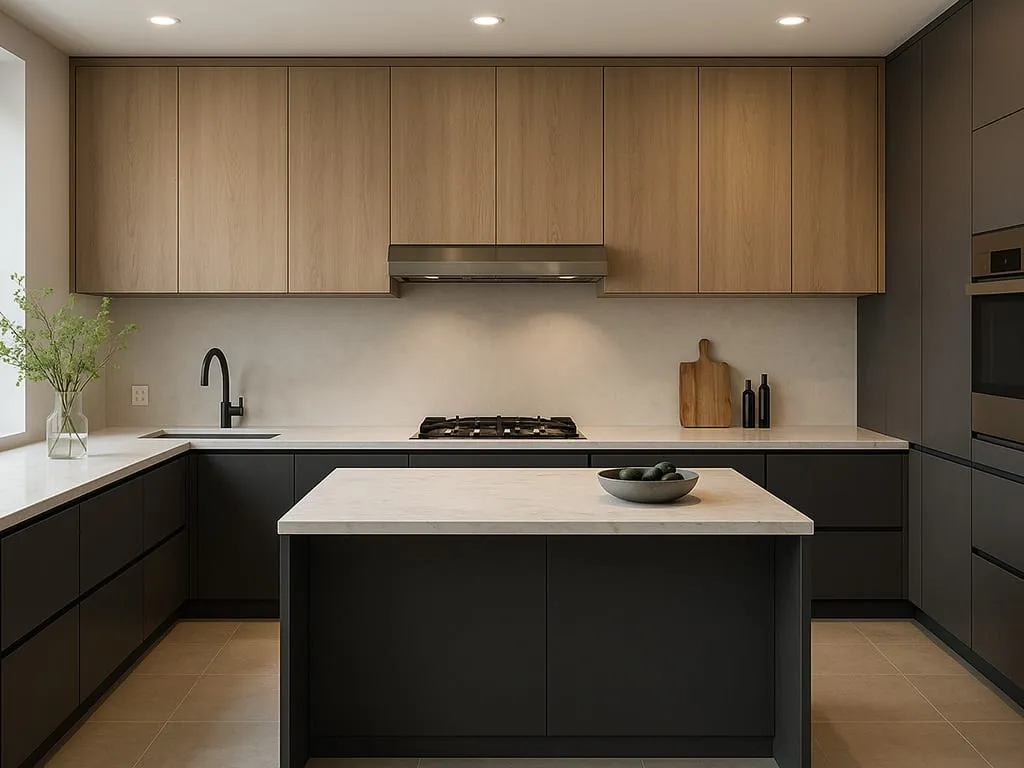
Cabinet hardware is a small detail with a big impact. A good hardware plan makes cabinets feel intentional and finished. A bad plan can make an otherwise clean install feel off: inconsistent heights, awkward placement, and handles that don’t feel good in the hand.
This guide covers how to plan cabinet hardware placement in a practical way, with a focus on consistency and usability.
Hardware decisions are easier when you decide what role hardware should play:
This matters because a “statement” plan can tolerate less inconsistency. If hardware is bold and high-contrast, crooked lines or uneven heights will show more. In practical terms: hardware is the part you touch every day, so it should look good and feel good. A little planning here prevents extra patching and rework later.
Knobs can feel:
Pulls can feel:
Many homes mix them intentionally (for example, knobs on doors and pulls on drawers), but consistency matters.
Practical selection tips:
Door hardware placement should be:
Even if you don’t use precise measurements in planning, choose a consistent reference point (like a corner offset or a line that aligns across the run).
Two placement patterns that are easy to live with:
If you have two doors that meet in the middle of a run, keep placement mirrored so the hardware reads as a pair.
Drawers are used differently than doors. Hardware should feel centered and natural for how you pull. If you have large drawers, pull size and placement matter more for comfort.
Comfort checks that prevent regret:
Cabinet layouts often include:
The goal is to create a consistent visual line so hardware doesn’t “bounce” up and down across the run.
In mixed layouts, decide what you want to align:
You don’t need perfection to get a clean look, but you do need a plan. When hardware is placed “by eye” on every door independently, the human eye catches the inconsistency.
Hardware finish can:
The best plan often coordinates hardware with other fixed finishes (faucets, lighting, appliances) without forcing everything to match perfectly.
Simple finish strategies that work well:
If the room is being repainted, paint color and lighting will affect how a metal finish reads. Coordinating paint and cabinet details can help the whole space feel intentional: Painting.
Practical test method:
This small step prevents permanent regrets.
If you’re installing hardware on many doors, consider using a template or jig. The goal is repeatability: the exact same placement across every cabinet. Even small measurement drift becomes visible when it’s repeated across a full kitchen run.
Most regrets come from rushed decisions. Common mistakes include:
If you pick a simple rule (one finish, one style family, one placement standard) and test it before drilling, you avoid most of the common issues.
Hardware decisions affect:
If hardware is backordered, it can delay the last details. Planning early helps keep the schedule smooth.
Ordering tips that reduce stress:
If you’re still in the planning phase for the overall cabinet project, this guide helps you gather the right information: Cabinet installation planning.
Not always, but it helps. Early decisions reduce last-minute stress and help keep placement consistent.
Yes, but new hardware may not match existing holes. Testing placement first helps avoid unwanted hole patterns.
Not required, but a cohesive finish plan usually looks best. Decide what should match and what can vary.
Use a repeatable placement method (template/jig) and align to a consistent reference point. If you are mixing door sizes, decide which line you want to keep consistent (for example, all drawer pulls align, while door knobs follow a corner rule).
Yes. Clean, consistent placement is one of the small details that makes cabinetry feel intentional. Even budget cabinets can look more premium when hardware lines are consistent and the finish choice is cohesive.
If you want a simple checklist before drilling:
If you want help planning a cabinet install and the finish details, start here: Cabinet installation.
If you’re bundling hardware installation into a cabinet project, these details reduce back-and-forth:
The goal is to confirm the finish plan and placement plan early so the final result looks consistent. If you want a second set of eyes, send photos and your hardware shortlist and we can help confirm a simple plan.
Tell us what you want to change and we will map out the work, price range, and next step.
Real feedback from recent renovation work.
William was an absolute pleasure to work with. He has great attention to detail and does very professional and clean work! He shows up on time and keeps his job site clean and organized. Can’t recommend him enough!
Rony Nasrallah • 2026-09-02
Kozub Remoldes LLC I highly recommend William Kozub. He spackled the sheet rock in a new bathroom and painted .He fixed 3 ceilings where drywall tape was separated and painted them. He was meticulous in his work and did a great job. He arrived on time each day and covered all the furniture and rugs before beginning work on a room. He covered each room with plastic and also the doorway so that dust didn’t escape. He cleaned up when he finished each room. He was concerned that I was satisfied and worked to make the job look great.
Alexis Maxwell • 2026-08-28
Very timely and great work for a good price. Also very clean work with great customer service. Highly recommend their work.
Гулноз Маллаева • 2026-08-27
Did a big 3500 sq ft house for me, bathroom, kitchen, hallway, and also painted outside front side of the house. Great work if I need anything else I will contact this company again.
Alyona Bondarenko • 2026-08-22
He did an amazing job. My new LVP looks wonderful!
A Andrews • 2026-07-15
Rating only. No written comment.
Mr_Roma _Voloshun • 2026-06-15
I highly recommend this contractor! They did an outstanding job remodeling my kitchen and bathroom, installing flooring and tile, and completing many other projects around my home. The quality of their work is excellent, and they pay close attention to every detail. They were professional, reliable, and easy to work with throughout the entire process. The project was completed on time, and the results exceeded my expectations. If you're looking for a contractor who takes pride in their craftsmanship and delivers high-quality work, I would definitely recommend them. Thank you for the fantastic job!
Vladimir Mishin • 2026-06-10
They came out and gave me a qoute fast and work was done quickly as well!
Jonathen Smith • 2026-06-09
very professional installation of subway tile on 2 bathroom floors. rapid response, speedy work but not sloppy. 100% happy with the job. patient and easy to work with.
Greg Burkett • 2026-06-05
William did a wonderful job painting our living room builtins. He was punctual and precise. The paint job is excellent and you would not know he was here when he left. We would definitely recommend!
Tonia Anderson • 2026-05-28
William is great! He did a very high quality job installing LVP floors throughout the first floor of my house in only one day at reasonable cost and I couldn’t be happier. He’s very diligent, respectful and showed up on time - very professional and easy to work with. I highly recommend his services! Thank you William!
Konstantin Shukhmin • 2026-05-21
William did an amazing job by doing a hardwood installation at our house was professional and he always keep our house clean and the results are amazing highly recommend his company to everyone
Alex Symkanych • 2026-05-20
William did an amazing job Very professional hardworking and the quality of the work was great.Everything turned out exactly how I wanted, and I would definitely recommend him to others.
samuel sharkadi • 2026-05-19
Super happy with how everything turned out. They did kitchen remodeling in my house and I am really satisfied, so the team was easy to work with, showed up on time, and did a really great job. Would definitely recommend!
Vlad Morzhul • 2026-05-18
I’m very satisfied with job of this company, he did bathroom remodel in my house, very high quality, and quickly, and everything around was clean and protected from dust, which I really liked. Communication was also at the highest level Thank you William so much for your efforts
Yevhen Smirnov • 2026-05-15
Great company, hardworking crew, and most of all Reliable and Professional.
Andrey Bondarenko • 2026-05-14
I want to thank this construction company for the excellent work! Everything was done with high quality, neatly, and within the promised timeframe. The team was very professional, always stayed in touch, and answered all our questions. You can tell they really know what they’re doing and take their work seriously. After the project was completed, everything was left clean and organized. I’m very happy with the result and can definitely recommend this company to others!
Рувім • 2026-05-13
Great work from a great young man he instilled my LVP flooring and painted the inside of my house
Roman Myname • 2026-05-10
“Great contractor, easy to work with and very professional. The work turned out amazing and everything was done on time. Highly recommend!”
Владік Лизанец • 2026-05-08
Excellent work and great experience overall! William was reliable, hardworking, and very skilled. Everything was completed neatly and with care, and the quality truly exceeded my expectations. I’m very grateful for the beautiful result and would happily recommend him to others.
Alex S. • 2026-05-07
I’m very happy with the work! He was professional, responsible, and paid attention to every detail. The renovation was done carefully and on time, and the final result looks great. I would definitely recommend
Julia Zhukova • 2026-05-07
Best company I’ve ever worked with. The quality of work is the best I’ve ever seen. On top of that William is a very good person to work with and be around. He always treats his clients with respect and is a joy to be around.I highly recommend kozub remodels if you need any remodeling work done in your house
Timofey Sharkadi • 2026-05-07
We wanted to add an additional room to a part of our house. William did a great job making what was essentially an attic into a room we could use. Highly recommend Kozub Remodels for any of your remodeling needs!
Miroslav Rad • 2026-05-05